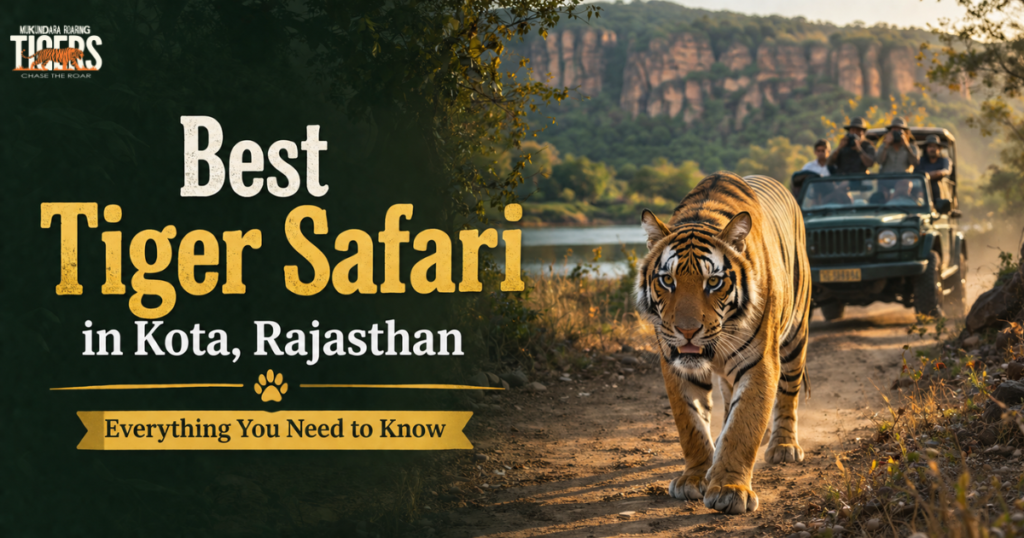
Your first tiger safari comes with a lot of unknowns. What do you actually do on a safari? How likely is a sighting? What happens if you don’t see a tiger at all? We get these questions from first-timers constantly, and this guide answers them the way we would if you called us directly.
What a Safari Actually Involves
A safari is a guided drive through the reserve in an open 4×4 jeep, usually seating up to 10 guests plus a guide. You’re not walking through the forest at any point. Everything happens from the vehicle, moving slowly along designated routes while your guide watches for signs of movement, alarm calls, tracks, or anything else worth stopping for.
Each safari runs about three hours and covers 20 to 22 km depending on which zone you’re in. There’s no set script beyond the route itself. Some drives are quiet stretches of forest with occasional deer and birdlife. Others bring you close to a tiger or leopard within the first twenty minutes. First-timers are often surprised by how much of the experience is simply being in the forest, tiger or not.
Setting Realistic Expectations
This is the single most important thing we tell every first-time guest. A tiger sighting is never guaranteed, on any safari, anywhere in the world. Anyone who promises otherwise isn’t being honest with you.
What we can promise is a guide who knows how to read the forest, pugmarks, alarm calls from deer, disturbed foliage, and gives you the best realistic shot at a sighting. Go in expecting a full forest experience rather than a guaranteed tiger, and the trip tends to land better regardless of what you actually see.
Choosing Your First Zone
Darrah zone is where we point most first-timers. It has the strongest overall tiger and leopard activity in the reserve and the best road network inside the park, which makes for a smoother introduction than some of the rougher, quieter circuits.
Once you’ve done one safari and have a feel for it, zones like Gothra Bhainsrodgarh or Rawatha make for a good second visit, offering denser forest and a slower pace. But for a first safari, Darrah gives you the most balanced experience.
Morning or Evening: What to Pick First
Both timings work, and neither is objectively better for a first safari. Morning safaris run from 6 AM to 10 AM and tend to catch animals more active before the day heats up. Evening safaris run from 3 PM to 7 PM and offer a second window as temperatures cool.
If you’re not used to early starts, the evening slot might make your first experience less of an adjustment. If you’re a morning person already, the early slot tends to bring slightly stronger wildlife activity, particularly in summer.
What to Bring on Your First Safari
Pack lighter than you’d think. A valid photo ID is essential, along with your booking confirmation. Dress in comfortable, earthy-toned clothing rather than bright colors, since it blends better into the forest. Sunscreen, a hat, and water matter regardless of season, and binoculars make a real difference if you want to actually see distant wildlife clearly rather than a shape in the distance.
If you’re coming in winter, a light jacket helps for the early morning cold. If you’re coming in summer, prioritize sun protection and hydration, since three hours in an open jeep under a strong sun adds up.
What Happens If You Don’t See a Tiger
This happens, and it’s worth preparing for mentally rather than treating it as a failed trip. Most first-time guests who go in expecting a full forest experience, rather than a guaranteed encounter, come away having genuinely enjoyed the safari regardless of whether a tiger showed up.
Leopards, sloth bears, and the reserve’s birdlife often end up being the highlight guests talk about afterward, sometimes more than the tiger itself. A digging sloth bear or a leopard moving through rocky terrain, can be just as memorable as a tiger sighting, especially for a first safari.
How Booking Works for First-Timers
Book online through our booking page or message us on WhatsApp if you’d rather talk it through first. We’re happy to walk new visitors through zone selection and timing if you’re unsure what to choose. Slots are limited daily and fill faster in winter, so booking a few days ahead is safer than assuming a walk-in slot will be available.
If you’re arriving from outside Kota, our pick-up and drop-off service covers the trip from the railway station or your hotel straight to the safari gate, useful if you’re not familiar with the local roads and don’t want to add that stress to an already new experience.
A Few Tips From Guides Who See First-Timers Often
Stay quiet once the jeep slows down. Sudden movement or noise is the fastest way to miss a sighting that was otherwise about to happen. Trust your guide’s instincts on where to stop and how long to wait. They’re reading signals you likely won’t notice yet, and patience in those quiet stretches is often what leads to the best moments.
Don’t fixate on your camera the entire time. It’s tempting to spend the whole safari looking through a lens, but plenty of first-time guests tell us afterward that the moments they remember most were the ones they watched directly, not through a screen.
Why This Guide Comes From Real Experience
This isn’t generic safari advice. It’s what we tell first-time guests every week, based on what actually helps and what tends to trip people up on their first trip into the forest.
Ready for Your First Safari
Your first tiger safari is closer and more approachable than it might feel right now. Book your Mukundara safari with us, and we’ll help you plan a first trip that sets realistic expectations and still delivers a real forest experience.
No. No safari anywhere can guarantee a sighting. Guides work to maximize your chances, not promise a specific result.
Darrah zone, thanks to its strong wildlife activity and smoother road network, is usually the best starting point.
Wear comfortable, earthy-toned clothing that blends into the forest, plus sunscreen, a hat, and layers depending on the season.
Both work well. Morning safaris often bring slightly stronger activity, while evening safaris suit those who prefer a later start.
It happens. Most first-time guests still enjoy the trip through other wildlife and the forest experience itself.