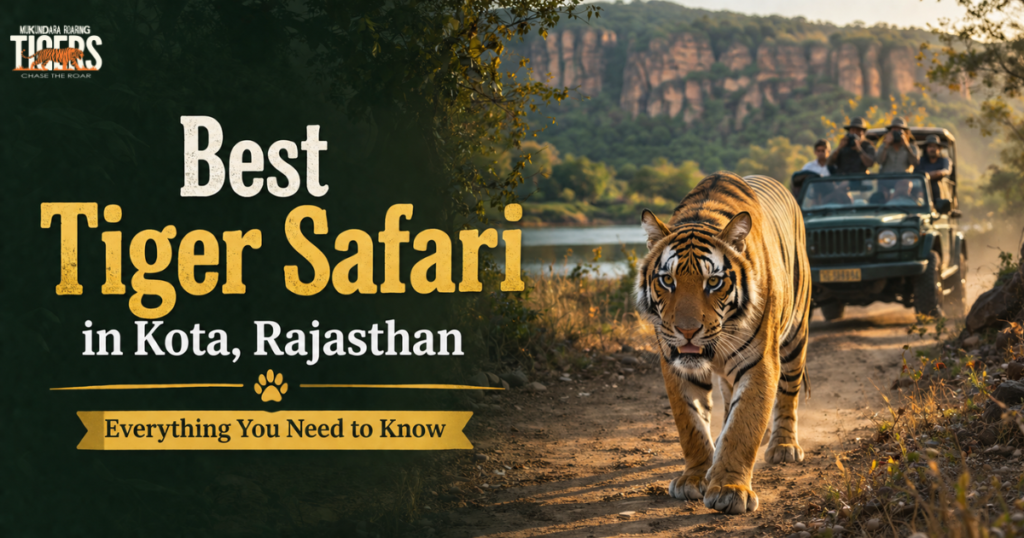
This is one of the first questions almost every guest asks us. Morning or evening, which one actually gives you a better shot? We’ve run both slots for years now, across every season and every zone, and the honest answer depends on what animal you’re hoping for and which route you’re on. Here’s how our guides actually think about it.
What Each Slot Looks Like on the Ground
Morning safaris run from 6 AM to 10 AM. Evening safaris run from 3 PM to 7 PM. Mornings start cool and quiet, and animals that were active overnight are often still moving when the first jeeps enter. The light in that first hour is soft, good for both visibility and photography. Evenings build the other way. As the afternoon heat eases, animals that stayed hidden begin moving again, and the last hour before sunset often turns out to be the most active stretch of the whole drive.
Animal by Animal: What Time Favors What
Bengal Tiger. Tigers move more in the cooler hours at both ends of the day. Early morning, right after the gates open, and the final hour before evening closing are when our guides report the strongest tiger activity. Midday heat pushes them into shade, so neither slot beats the other outright, but the first thirty minutes of a morning drive and the last thirty of an evening drive are the two windows we tell guests to stay especially alert.
Leopard. Leopards lean more nocturnal and crepuscular than tigers, meaning dawn and dusk are genuinely their peak windows. This makes evening safaris, particularly the final hour, slightly stronger for leopard sightings in our guides’ experience, especially along the rocky stretches of the Darrah and Gagron route.
Sloth Bear. Sloth bears dig near termite mounds at dawn, which makes early morning the clear favorite here. Summer evenings can also produce sightings near water sources as bears come out once the heat breaks, but dawn remains the more reliable window across seasons.
Hyena and Jackal: Both are more active after dusk, so evening safaris, especially the last hour, tend to produce more sightings. Jackals in particular show up often at dawn too, moving through open grassland in pairs.
Chital, Sambar, and Nilgai: These grazers are active through most of the day, so timing matters less here than for predators. Chital and sambar herds are usually visible on both morning and evening drives, and their alarm calls, our guides’ most reliable predator signal, work just as well in either slot.
Wild Boar: Boar tend to root through undergrowth near water sources in the cooler parts of the day, morning and evening both, and are common enough that most safaris catch at least one group regardless of slot.
Indian Wolf: Wolves favor the quieter, scrub-heavy zones and are most often spotted during early morning drives, when the open terrain they prefer is still cool and calm.
Crocodile and River Wildlife: On the boat safari routes, crocodiles bask most visibly in the mid-morning sun, making a morning boat safari the stronger choice if crocodiles are the priority. Otters and turtles show up across both timings, though calmer morning water tends to make them easier to spot.
Birdlife: Morning is generally the stronger window for birdwatching. Crested serpent eagles are more active as thermals build through the morning, and migratory species along the Chambal and Kali Sindh tend to be most visible in the earlier hours before the day’s heat sets in.
Route by Route: Where Timing Matters Most
Darrah and Gagron circuit: This route has the reserve’s strongest overall tiger and leopard movement, and both matter here depending on timing. Morning suits tiger tracking better; evening, especially the final hour, tends to favor leopard sightings along the rocky stretches near Darrah gaon and Sunderpura.
Gothra Bhainsrodgarh zone: Denser forest, quieter roads, and less jeep traffic than Darrah. Sloth bear activity near this zone is strongest at dawn, making a morning slot the better fit if this is your route.
Rawatha circuit: Open grassland through Rawatha, Ram Sagar, and Mandargarh, home to chinkara and nilgai. Since these grazers are active most of the day, timing matters less here than on the predator-heavy routes, so pick based on your own schedule rather than the wildlife.
Bhainsrodgarh circuit (100 km route): Passing Saddle Dam, Rewajhar gorge, Kalsiya Mahadev, and Chulia Falls, this route is as much about landscape as wildlife. Morning light suits the gorge photography better, though wolf sightings in the quieter stretches also favor early hours.
Kota Dam boat safari (25 km): Crocodiles, turtles, otters, sloth bears near the banks, and vultures overhead. Morning is the stronger pick here, mainly for crocodile visibility.
Agra Jetty to Nimdi Jetty boat route (40 km): The gorge stretch with gharial nesting banks. Timing matters less than season here, since water levels and current shift more with monsoon than with time of day.
Season Still Overrides Time of Day
Even with all of the above, season changes the calculation more than the clock does. In summer, mornings beat evenings across almost every animal, since the heat by 3 PM hasn’t broken yet and activity stays suppressed. In winter, both slots hold up well, so pick based on preference for tiger versus leopard, or route versus route. In monsoon, timings shift with the Forest Department’s weekly call, and our guides adjust route recommendations accordingly rather than sticking to a fixed rule.
What We Tell Guests With Only One Slot to Choose
If tiger or bear sightings matter most, go morning. If leopard or hyena sightings are the priority, go evening. If you’re not chasing one specific animal and just want the fullest forest experience, pick whichever fits your schedule better, since our guides genuinely see strong sightings in both slots across a typical week.
Why This Comes From Running Every Slot and Every Route Ourselves
This isn’t general safari advice. Our guides run every route listed here, in both morning and evening slots, across every season, under Rajasthan Forest Department permits. When we say leopards favor the evening or sloth bears favor the dawn, it’s because that pattern shows up again and again in what our team actually sees, not because it sounds reasonable on paper.
Ready to Book Your Slot
Whichever animal or route you’re hoping for, book your Mukundara safari with us, and our team can match your timing to what you actually want to see.
Both the first hour of morning and the last hour of evening tend to be strongest, since tigers favor the cooler parts of the day at either end.
Evening, particularly the final hour before closing, tends to favor leopard activity along rocky routes like Darrah and Gagron.
Early morning, when they’re active near termite mounds at dawn.
Yes. Morning generally offers stronger crocodile visibility on the Kota Dam route, though timing matters less on the Agra Jetty gorge route.
In summer, yes, mornings are stronger across almost every animal. In winter, both slots hold up well, so animal preference matters more than season.