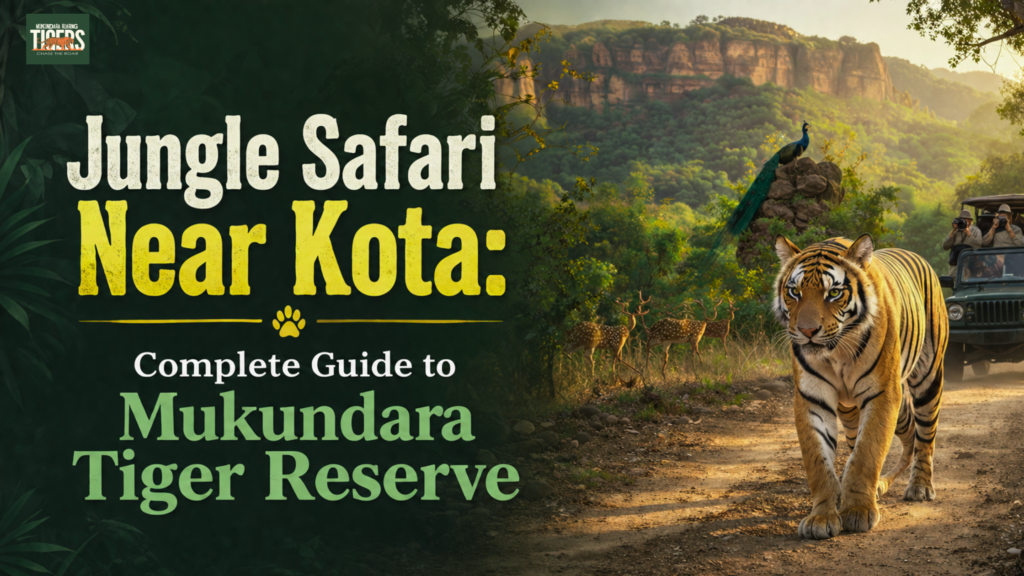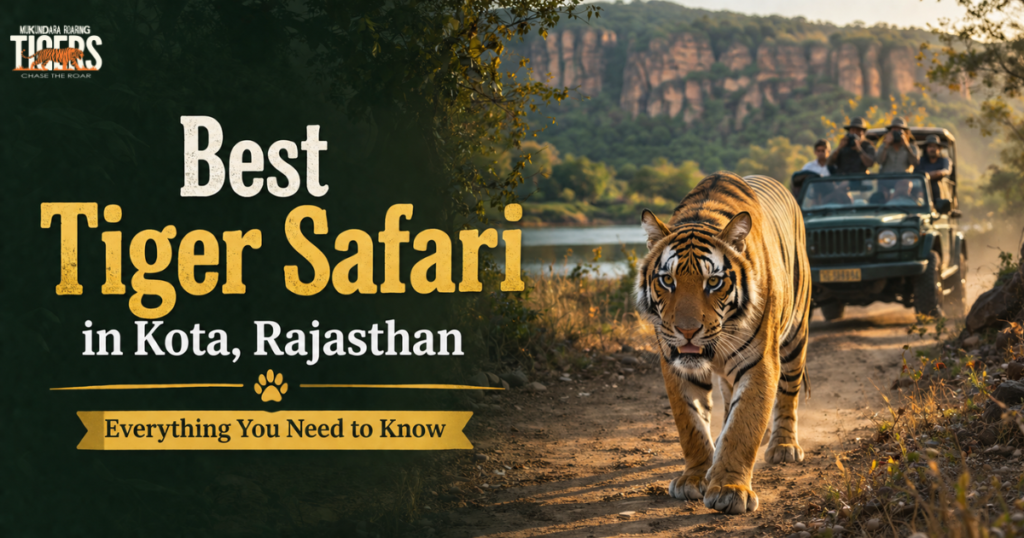
Kota doesn’t usually come up first when people think about wildlife tourism in Rajasthan. That’s starting to change, and we know, since we run wildlife tours here every single week. A wildlife tour in Kota means one place above all else: Mukundara Hills Tiger Reserve, sitting just outside the city and offering an experience most visitors don’t expect from a place better known for coaching institutes than tigers.
This guide covers what a wildlife tour here actually involves, based on what our guides tell visitors every day, operating under Rajasthan Forest Department permits. Not a general overview pieced together from other travel sites.
Our Experience: What We See on a Typical Tour
Most wildlife tourism in Rajasthan pulls people toward Ranthambore, and for a long trip, that still makes sense. But a wildlife tour based in Kota offers something Ranthambore can’t: proximity. The reserve gate sits roughly 20 to 22 km from the city, so your whole tour barely loses time to travel.
We’ve watched this shape how people plan their trips over the seasons we’ve been running tours here. Guests who’d never have considered a standalone wildlife holiday end up adding a Kota tour onto a work trip or a weekend visit, simply because it fits. That accessibility is really the heart of what a wildlife tour in Kota is about, and it’s the single most common reason first-time guests give us when they book.
Our Expertise: What’s Actually Included in a Tour
A proper wildlife tour here isn’t just one safari and done. It typically combines a jeep safari through the forest and, for guests who want the fuller picture, a boat safari along the Chambal River. Our guides treat these as genuinely different experiences, not interchangeable options. The jeep safari moves through teak forest and grassland, chasing tigers, leopards, and sloth bears. The boat safari puts you on the water, past crocodiles, otters, and river birds instead.
We usually recommend combining both if your schedule allows it. Guests who’ve only done the jeep safari often tell us afterward they wish they’d known about the boat route sooner. It genuinely changes the shape of the tour, and it’s the kind of detail we’ve learned matters from running both routes ourselves, not from a brochure description.
Zones We Recommend and Why
Mukundara runs across several distinct circuits, and our guides place first-time guests differently than repeat visitors based on what each zone offers.
Darrah zone sees the strongest tiger and leopard activity and has the smoothest roads, which is why we point most first-timers here. Gothra Bhainsrodgarh, running along the Chambal, offers a quieter, denser alternative with less jeep traffic, one our guides suggest for a second visit. Rawatha is smaller still, with temple ruins and rock paintings scattered along the route, better suited to guests who want a slower pace over a checklist of sightings.
For the boat safari, the Kota Dam route covers about 25 km with a strong wildlife mix, while the longer Agra Jetty to Nimdi Jetty route runs through dramatic gorge country and a chance at gharial sightings.
What Our Guides Watch For
Tigers headline the tour, reintroduced here in 2018 with a population that’s grown steadily since. But our guides will tell you honestly that the tiger is often not the sighting people remember most. Leopards moving through rocky terrain, a sloth bear digging near a termite mound at dawn, or a crocodile basking along the Chambal tend to stick with visitors just as much.
Our naturalist guides read alarm calls from chital and sambar, fresh tracks, and disturbed foliage before deciding which route to take on a given morning. Chital, sambar, and nilgai fill out the grassland sightings, and birdlife runs strong throughout, crested serpent eagles, painted spurfowl, and a real influx of migratory species come winter.
Best Time for a Wildlife Tour, Based on What We See Season to Season
The reserve stays open all year, which already sets it apart from places with fixed seasonal closures. Winter, October through February, is when we see the most bookings, thanks to comfortable weather and the strongest overall wildlife activity our guides report. Summer pushes animals toward waterholes, making sightings more predictable near fixed points despite the heat. Monsoon brings a quieter, greener reserve with timings that shift depending on the Forest Department’s call that week.
We don’t push any one season as objectively best. It depends entirely on what kind of tour you’re after, and we say the same thing to every guest who asks.
How We’d Structure a First-Time Tour
If it’s your first wildlife tour in Kota, we’d suggest starting with a morning safari in Darrah, resting through the afternoon heat, then an evening drive in a second zone like Bhainsrodgarh. If you’ve got a second day, swap in the boat safari instead of repeating a jeep drive. That structure gives you three distinct experiences without overloading the trip, and it’s the sequence we recommend most often when guests ask us to plan it out for them.
Booking and Getting Here
Book through our safari booking page or message us directly on WhatsApp if you’d like help choosing zones or timing. Kota Junction connects directly to Delhi, Mumbai, and Jaipur by rail, and NH52 covers the road route from most major cities in the state. Our pick-up and drop-off service handles the final stretch from the station or your hotel straight to the safari gate.
Why You Can Trust This Guide
Everything above comes from the team that actually runs these tours, coordinates the pickups, and guides the safaris, week after week, under Rajasthan Forest Department permits. We’re not summarizing what other sites say about wildlife tourism in Kota. When we say Darrah suits first-timers or the boat safari is worth adding, it’s because we’ve watched hundreds of guests confirm exactly that on the ground, not in theory.
Ready to Plan Your Wildlife Tour
A wildlife tour in Kota is a lot more within reach than most people assume.
Book your Mukundara safari with us, and let our team build a tour around your dates and what you want to see.
A jeep safari through Mukundara’s forest zones, often paired with a boat safari along the Chambal River for a fuller experience.
Yes. Mukundara Hills Tiger Reserve sits roughly 20 to 22 km from Kota city and is the primary wildlife tourism site in the area.
Lorem ipsum dolor sit amet, consectetur adipisicing elit. Optio, neque qui velit. Magni dolorum quidem ipsam eligendi, totam, facilis laudantium cum accusamus ullam voluptatibus commodi numquam, error, est. Ea, consequatur.
If your schedule allows, yes. They cover different ecosystems and wildlife, and combining both gives a fuller tour.
It’s about a 30 to 45 minute drive, and our pick-up and drop-off service covers the trip from Kota Junction or your hotel.