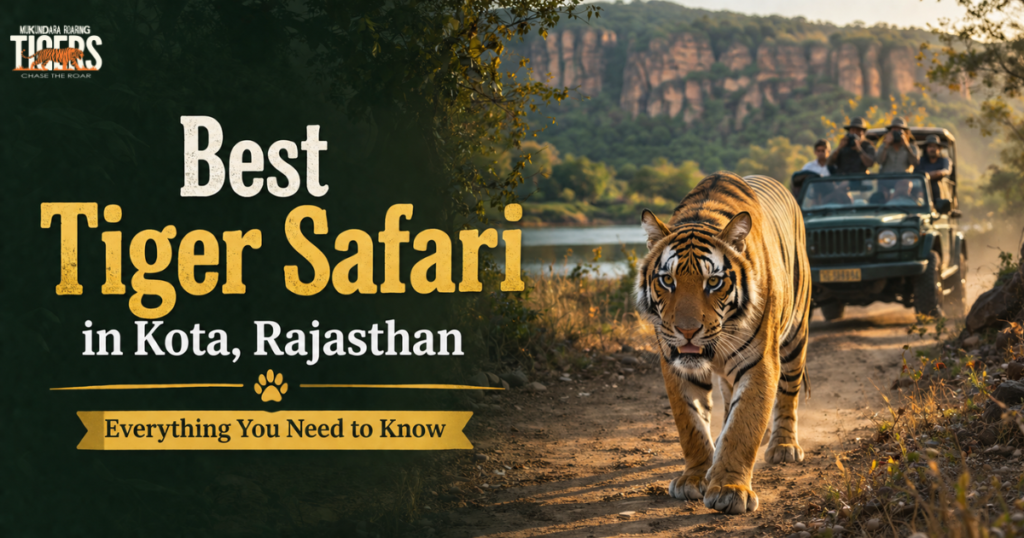
Mukundara Hills Tiger Reserve (MHTR) is open for visitors all year round. That is one reason that separates it from several reserves in Rajasthan, which have a fixed monsoon closure and restrict your travel time. In this place, the safari schedule varies seasonally and is determined by the Rajasthan Forest Department, but you can go on safari whenever you want to.
However, every season is one in its own way. Things vary from month to month, such as temperature, wildlife activity, population numbers, and even the color of the terrain. This guide helps you understand everything so you can visit as you want to visit.
Winter Season: October to February
For a Mukundara safari, winter is the ideal time to visit because of its perfect climate, rich wildlife population, and presence of snow-capped mountains. The mornings remain crisp, the days comfortable, and the long hours in a big jeep don’t seem like a chore. The weather can be expected to vary from cool at the start of the day in the low teens to a pleasant afternoon, which is perfect for exploring the reserve on a long day.
Animals are more active in the daylight hours in this weather. Tigers, leopards and sloth bears are not as likely to head for the deep shade like in the summer heat. The months are also good for birdwatching, as migratory birds also arrive in these months along the Chambal and Kali Sindh rivers, apart from the usual sighting of mammals.
Winter is the high season of both the year and the entire state of Rajasthan – Mukundara is no exception. Slots come and go quicker, hotels in Kota are filling up more, popular safaris such as Darrah have more vehicles. If you are going on safari during winter, book your trip early. This window is good for both morning and evening, so select according to your travel schedule and not because you think the wildlife activity decreases at that time.
Summer Season: March to June
Summer heat climbs fast in this part of Rajasthan, often crossing 40 degrees Celsius by afternoon. That sounds like a clear drawback, but it actually changes animal behavior in a way that works in your favor.
Heat pushes tigers, leopards, and sloth bears toward waterholes and shaded river stretches. Animals that might wander widely in cooler months become more predictable near fixed water sources during summer. Morning safaris become the stronger choice in this season, since general activity drops sharply once the sun climbs high and temperatures peak in the early afternoon.
There is another upside to a summer visit. Fewer tourists travel during peak heat, which means quieter roads inside the reserve and a more relaxed, less crowded safari experience overall. If you can handle the temperatures and prioritize an early start, summer offers a genuinely different kind of trip, one with fewer vehicles competing for the same sighting.
Monsoon Season: July to September
The reserve stays open through monsoon too, with timings adjusted by the Forest Department to suit the season. This is the one stretch of the year most visitors overlook, but it has its own appeal. The landscape turns green and dramatic, rivers run fuller, and the boat safari routes along the Chambal take on a completely different character compared to the dry months.
Roads inside the reserve can be affected by rainfall, so timings and availability may shift more during monsoon than in other seasons. It is worth confirming your slot close to your actual travel date if a monsoon trip is on your calendar, since conditions can change with the weather. Wildlife sightings during this period lean more toward birdlife and river activity than dense forest tracking, since thicker vegetation makes visibility harder in some zones.
Time of Day Matters as Much as Season
Regardless of the month you choose, timing within the day shapes your safari just as much as the season itself. Morning slots run early, when temperatures stay low, and animals move actively before retreating into shade or cover. Evening slots pick up again as the heat fades, offering a second active window before sunset settles over the hills.
Photographers often prefer the morning safari for softer light and better visibility across the grassland stretches, especially in winter when mist can add atmosphere to early shots. Evening safaris, on the other hand, tend to offer warmer light and a calmer pace as the reserve winds down for the day.
What to Bring, Whatever Season You Visit
Some essentials stay the same no matter when you travel. Carry a valid photo ID and your booking confirmation. Dress in comfortable, earthy-toned clothing that blends into the forest rather than standing out against it. Add sunscreen, a hat, drinking water, binoculars, and a camera to your kit.
Winter visitors should pack a light jacket or shawl for the early morning chill. Summer visitors should prioritize hydration and sun protection, since three hours in an open jeep under a strong sun adds up fast. Monsoon travelers should carry a light rain layer and stay flexible on timing.
Season-Wise Comparison at a Glance
Winter suits first-time visitors who want comfortable weather and strong overall sightings across the board. Summer suits visitors chasing waterhole activity near fixed water sources, especially those comfortable with heat in exchange for quieter roads. Monsoon suits travelers who want a greener, quieter reserve and don’t mind planning around seasonal timing shifts and occasional weather-driven changes.
None of these seasons is objectively the wrong choice. The right one depends entirely on what you are hoping to experience.
Why Trust This Guide
This guide is written by the team that runs Mukundara safaris on the ground, operating under Rajasthan Forest Department guidelines with government-approved permits. We are not summarizing what other sites say about the reserve. We are describing what our guides see across a full year of safaris, season after season.
Ready to Plan Your Visit
Whatever season fits your travel plans, Mukundara rewards visitors who match their expectations to the weather. Winter for comfort and volume of sightings, summer for waterhole activity and quieter roads, monsoon for a greener, dramatic forest, and every month for the simple fact that the reserve never really closes.
Ready to book your Mukundara safari? Reserve your slot with us and let our team guide you to the best timing for your trip.
October to February offers the most comfortable weather and strong overall wildlife activity, making it the most popular season.
Yes. You can visit Mukundara Hills Tiger Reserve throughout the year, with safari timings adjusted seasonally by the Forest Department.
Not necessarily. Heat pushes animals toward waterholes, which can improve sightings during morning safaris despite the higher temperatures.
Yes. The reserve stays open, though timings and road conditions may shift more than in other seasons.
Both offer good wildlife activity. Mornings suit photographers chasing soft light, while evenings work well as temperatures cool down.