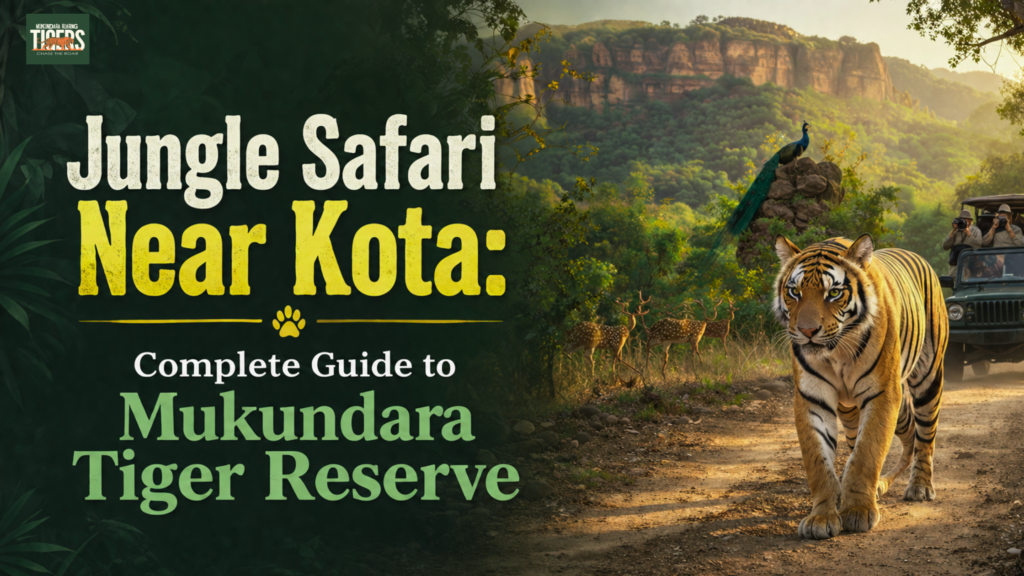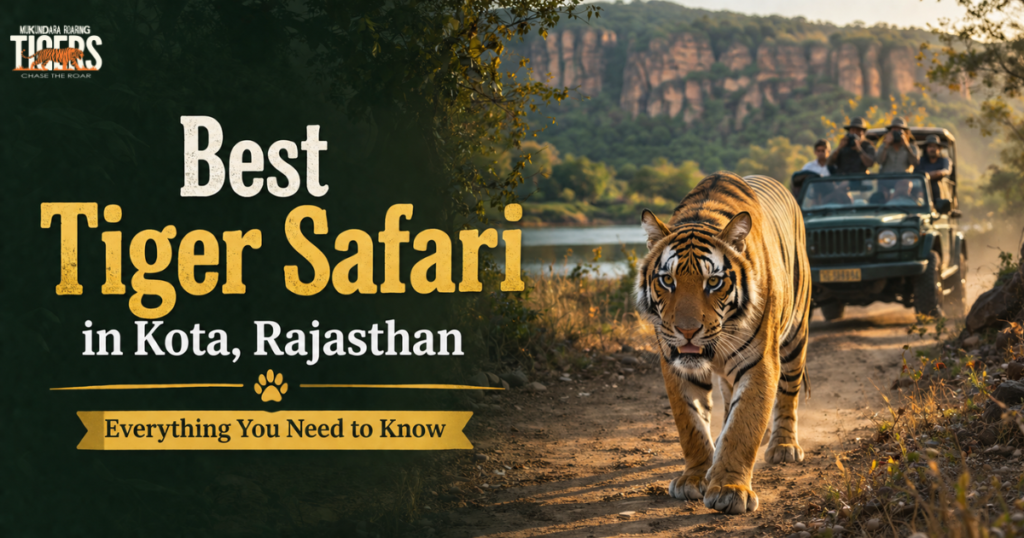
Mukundara Hills Tiger Reserve holds far more than its name suggests. Yes, tigers are the headline. But our guides spend three hours a day, every day, moving through this forest, and the sightings that stick with visitors are rarely just the tiger.
This guide covers what actually shows up on a Mukundara safari, based on what our team sees across zones and seasons, not a generic wildlife checklist copied from a brochure.
Bengal Tiger
The tiger is why most visitors book. Mukundara’s tigers were reintroduced in 2018, and the population has grown steadily since. Our guides track movement patterns across zones like Darrah and Bhainsrodgarh, and sightings depend heavily on recent weather, time of day, and which territory is active that week.
We tell every guest the same honest thing before a safari starts. A tiger sighting is never guaranteed on any wildlife drive, anywhere in the world. What we can promise is a guide who reads pugmarks, alarm calls, and behavior from other animals to give you the best possible shot.
Leopard
Leopards move through the rocky, hilly stretches of the reserve, particularly around the Darrah and Gagron circuit. They are harder to spot than tigers since they favor dense cover and rocky outcrops over open grassland.
Our guides often catch leopard movement early morning or right before dusk, when they are most active. If you are specifically hoping for a leopard, we usually recommend the evening safari slot.
Sloth Bear
Sloth bears dig near termite mounds at dawn, and they are one of the sightings our team gets most excited about, since they behave so differently from the big cats. Watch for disturbed soil and torn-open mounds along forest trails. Our guides read these signs the way trackers read pugmarks.
Summer safaris tend to offer better sloth bear activity near water sources, since the heat concentrates animal movement around fixed points.
Hyena and Jackal
Striped hyena sightings are less common but not rare. They tend to appear in the quieter zones, away from heavier jeep traffic. Jackals show up more frequently, often in pairs, moving through open grassland at dawn and dusk.
Chital, Sambar, and Nilgai
These three form the backbone of Mukundara’s grazing wildlife. Chital, the spotted deer, gather in herds across open patches through the day. Sambar, the larger deer, prefer the tree line and thicker cover. Nilgai, Asia’s largest antelope, graze in open stretches and are usually the easiest sighting on any safari.
Our guides use chital and sambar alarm calls as one of the strongest live signals of a nearby predator. When the herd goes quiet or scatters, we slow down and watch closely.
Wild Boar
Wild boar move in small groups, often rooting through undergrowth near water sources. They are common enough that most safaris see at least one group, though they rarely stay in the open for long.
Indian Wolf
Indian wolves are one of the more elusive sightings at Mukundara. They favor open, scrub-heavy terrain over dense forest, and our guides watch for them most in the quieter zones during early morning drives.
Crocodile and River Wildlife
The boat safari routes along the Chambal add an entirely different set of wildlife to the trip. Crocodiles bask along the riverbanks, especially in the cooler months. Otters and turtles round out the river ecosystem, giving boat safari guests a very different experience from a jeep safari.
Birdlife at Mukundara
Peacocks are a constant presence across the reserve, often the first wildlife guests see on any drive. Crested serpent eagles circle above the ridges, and painted spurfowl hide in dry leaf cover, harder to spot but rewarding when you do.
Migratory birds arrive along the Chambal and Kali Sindh rivers in winter, adding strong birdwatching to an already active season. Our guides who focus on birdlife tend to prefer the boat safari routes over jeep routes for this reason.
How Our Guides Read the Forest
Wildlife sighting at Mukundara is rarely about luck alone. Our naturalist guides watch alarm calls, tracks, disturbed foliage, and even wind direction before deciding which route to take on a given morning. A guide who runs this reserve daily notices things a first-time visitor never would, a fresh pugmark, a scattered herd, a bird calling in a specific pattern.
This is part of why we push guided safaris over any self-guided alternative. The forest tells a story every day. Our job is knowing how to read it.
Why Trust This Guide
This guide comes from the team running Mukundara safaris daily, under Rajasthan Forest Department permits. We are not describing wildlife we read about elsewhere. This is what our guides track, season after season, safari after safari.
Ready to See It for Yourself
The best way to understand Mukundara’s wildlife is from the jeep, with a guide who knows this forest. Book your Mukundara safari with us and let our team show you what the reserve actually looks like, up close.
Tigers, leopards, sloth bears, hyenas, chital, sambar, nilgai, wild boar, Indian wolves, and crocodiles along the river routes.
No. Sightings depend on weather, time of day, and territory activity. Our guides work to maximize your chances, not promise a result.
The Darrah and Gagron circuit sees frequent leopard activity, especially during early morning and evening safaris.
Yes, especially for crocodiles, otters, and river birdlife you won’t see on a jeep safari.
Winter offers the strongest overall activity and birdwatching, though each season brings a different mix of sightings.