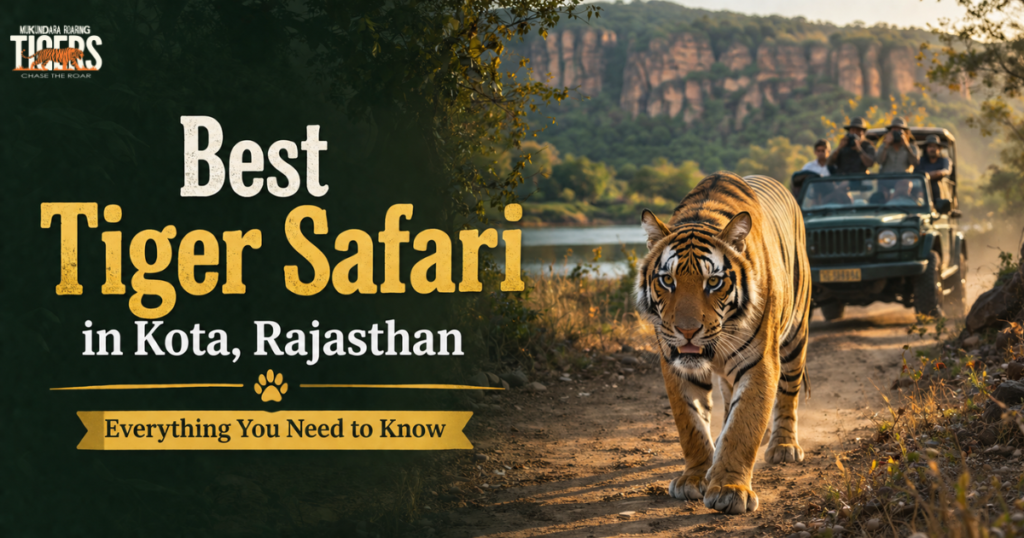
A tiger safari in Rajasthan usually means one of a handful of reserves, and Mukundara Hills Tiger Reserve near Kota is one worth taking seriously. It doesn’t get the crowds some other reserves do, and once tigers were reintroduced here in 2018, the forest has quietly built a reputation among people who want a genuine safari without fighting for space at every sighting.
This guide covers what actually matters if you’re planning a trip here: when to go, which zone to pick, and how booking works. All from the team that runs these safaris day in and day out.
Best Time for a Tiger Safari at Mukundara
The reserve stays open all year, which already sets it apart from places that shut down for months at a stretch. That said, the season you pick changes what your safari feels like.
Winter, roughly October through February, is when most people come. Mornings are cool, wildlife stays active through the day instead of hiding from the heat, and migratory birds show up along the Chambal and Kali Sindh rivers as a bonus. It’s also the busiest stretch, so slots fill faster than the rest of the year.
Summer runs March to June and gets properly hot, often past 40 degrees by afternoon. Oddly, that works in your favor. Animals stick close to waterholes when it’s this warm, which makes early morning safaris more predictable than you’d expect. Fewer tourists travel in this heat too, so the roads inside the reserve stay quieter.
Monsoon, July through September, is the one most people skip, and the reserve does stay open through it, just with timings that shift depending on the Forest Department’s call for that week. The forest turns green, and the boat routes along the Chambal look completely different. Rain can affect road access though, so it’s worth confirming your slot close to your travel date rather than locking it in months ahead.
Zones Worth Knowing Before You Book
Mukundara isn’t a single loop. It runs across a few distinct circuits, and picking the right one shapes your whole safari.
Darrah zone: sees the most tiger and leopard movement of anywhere in the reserve, and it’s where most first-timers start. If tiger sightings are the priority, this is the zone to request.
Gothra Bhainsrodgarh zone: runs along the Chambal River and pulls in noticeably less jeep traffic. The forest here is thicker, the pace slower, better suited to people who want a quieter drive over a guaranteed sighting.
Rawatha zone: is smaller and calmer still, with temple ruins and rock paintings scattered along the route. A good pick if you’re not chasing a checklist and just want time in the forest.
Bhainsrodgarh circuit: the longer road route stretching close to 100 km, passes gorges, waterfalls, and old caves. It’s less about the tiger and more about the landscape itself.
Kota Dam and Chambal boat safaris: trade the jeep for water, and bring crocodiles, otters, and river birds into the mix instead of forest wildlife.
Each zone runs on its own permit, so you can’t hop between them on the same drive. Worth deciding in advance based on what you actually want to see.
How Booking Actually Works
Book online through our safari booking page, or message us directly on WhatsApp if you’d rather sort it that way. Slots are limited each day and go faster during winter, so booking a few days ahead is safer than assuming you can walk in.
Safaris run in two shifts: morning from 6 AM to 10 AM, and evening from 3 PM to 7 PM. Each drive lasts about three hours and covers 20 to 22 km depending on the zone. Vehicles are Force 4×4 jeeps, 11-seaters, carrying up to 10 guests plus a guide.
Carry a valid photo ID on the day. If you’re arriving from outside Kota, our pick and drop service can cover the trip from the railway station or your hotel straight to the safari gate, which saves a fair bit of hassle if you’re not familiar with the local roads.
A Few Booking Tips Worth Knowing
Book your zone, not just a generic slot. Which circuit you’re placed in changes the whole experience, so it’s worth asking rather than leaving it to chance.
If tiger sightings matter most to you, go with Darrah and stick to a morning safari. If you’d rather have a quieter, less crowded drive, Bhainsrodgarh or Ranthambhore will suit you better, even if the odds of a tiger sighting drop slightly.
Don’t assume walk-in slots will be available, especially in winter. We get plenty of guests who show up hoping for a same-day booking and end up disappointed. A confirmed slot removes that risk entirely.
Why This Guide Is Worth Trusting
Everything here comes from actually running these safaris, not from summarizing what other websites say about the reserve. We operate under Rajasthan Forest Department permits and coordinate zones, timings, and pickups for guests every single week. This is what we tell people who call us asking the exact questions this guide answers.
Ready to Book Your Tiger Safari
If a tiger safari in Rajasthan is on your list, Mukundara is worth putting at the top of it. Book your safari with us, and we’ll help you pick the right zone and timing for what you’re after.
October to February offers the most comfortable weather and strongest overall wildlife activity, though the reserve stays open year-round.
Darrah zone sees the most consistent tiger and leopard movement across the reserve.
Book online through our booking page or message us on WhatsApp. Slots are limited daily, so booking ahead is recommended.
Yes. The reserve stays open through monsoon, though timings and road access may shift depending on the weather.
Yes. Our pick-up and drop-off service covers arrivals from Kota Junction and other points to the safari gate.